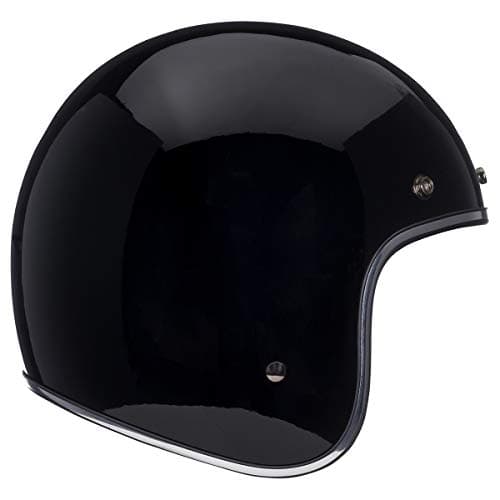
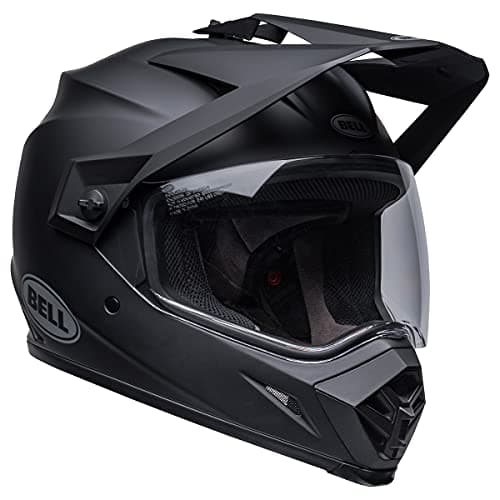
The best DOT-approved motorcycle helmet is the Bell MX-9 Adventure MIPS, because it is the cheapest helmet we can document that backs its DOT label with three independent things at once: ECE 22.06 type approval, a MIPS rotational-management layer, and an independent SHARP crash rating of 4 out of 5. The budget pick is the Bell Custom 500, which is the cheapest helmet on this page and also the one with the most obvious trade - it has no chin bar at all. Who this page is for: a US rider who has worked out that the helmet has to be DOT approved to be legal, and now wants to know which DOT helmet is actually worth buying.
Start with the thing most "best DOT helmet" lists never say out loud. Every street-legal motorcycle helmet sold in the United States carries DOT, so "DOT approved" does not separate one helmet from another. DOT is the US Department of Transportation standard FMVSS 218, administered by NHTSA, and it is self-certified: the manufacturer declares that the helmet meets the standard and applies the sticker itself. NHTSA buys helmets off the shelf and spot-checks them afterwards, but no independent lab signs off before the helmet reaches you. That system works well for reputable brands. At the bottom of the market it is also why counterfeit "novelty" DOT stickers are a known problem.
So a list ranked on the DOT sticker alone would be meaningless, and we did not build one. This page ranks six helmets by what somebody independent added on top of the DOT label - and includes two helmets at the bottom whose only verified approval is DOT, clearly labeled as such, because pretending otherwise would be the opposite of useful. The full breakdown of the four marks is in DOT vs ECE vs Snell vs SHARP.
How to read the prices here. We do not print dollar figures in prose - the buy module on each pick carries the live price pulled from the Amazon product API, stamped with the date it was checked, and that card is the authoritative figure. The six picks run from well under $200 to the high hundreds. We have not worn or crash-tested any of them. What we have done is read what each maker publishes and check whether an independent body has tested it.
What DOT actually tests - and what it leaves out
The FMVSS 218 tests are real and meaningful. A helmet is dropped onto flat, hemispherical and curbstone anvils to measure impact attenuation, it faces a penetration test, the retention system (the strap and its anchorage) is load-tested, and the shell must leave at least 105 degrees of peripheral vision to each side. A helmet that genuinely passes all of that is a real helmet.
What FMVSS 218 does not include is the part that has changed most in modern helmet design. There is no oblique or rotational impact test - DOT measures straight-line linear deceleration - and the standard does not test the visor or the chin bar of a modular in its open position. ECE 22.06 added exactly those things, which is why the first four picks below lead with it. Our ECE 22.06 explainer covers what the revision changed, and the MIPS explainer covers the component riders most often confuse with a certification.
How we ranked six DOT-approved helmets
The criteria, in this order:
- Independent verification on top of DOT. An ECE 22.06 type approval means an independent lab tested the helmet and samples came off the production line. Snell M2025 means an independent foundation tested it to its own stricter protocol. A SHARP score means the UK Department for Transport bought the helmet anonymously and ran 32 impacts across seven samples. DOT alone means the maker signed its own homework.
- Whether the ECE revision is named."DOT/ECE" with no revision printed anywhere is not the same claim as ECE 22.06, and we do not round it up. Two picks here are in that position and are ranked accordingly.
- Coverage of the head. A certification applies to the helmet as built. An open-face that passes FMVSS 218 still has no chin bar, and no standard can change that.
- Shell material and published weight in a stated size. These six run from polycarbonate to a hand-laid composite laminate, and the gap shows up in both weight and price.
- Format coverage. An adventure helmet, a sport-touring full-face, a retro full-face, a convertible modular, a touring Bandit and an open-face classic - so the page answers more than one rider.
1. Bell MX-9 Adventure MIPS - the most independently verified DOT label here
This is the pick that answers the question properly. The MX-9 Adventure carries genuine US DOT plus ECE 22.06, adds a MIPS low-friction layer designed to manage rotational force, and - the part almost nothing in its price range can show - it has been independently crash-tested by SHARP at 4 out of 5 stars. Polycarbonate shell, published ~1,696 g, removable peak. Who it is for: a rider who wants proof rather than paperwork, and does not want to spend up for it.
Detail in the Bell MX-9 Adventure review, the certification in its safety rating, and the brand picture in are Bell motorcycle helmets good?
The honest cons. The polycarbonate shell is not premium and it is heavy for an adventure helmet at ~1,696 g. It is louder and less refined at speed than a Shoei or Arai, and the peak generates more lift at highway speed than the engineered peaks on pricier adventure lids. There is no drop-down sun visor. It is the least luxurious helmet on this page and it out-documents four of the five below it anyway.
Who should skip it: riders who tour at highway speed every weekend - peak lift and noise get old. Read best adventure touring helmets instead.
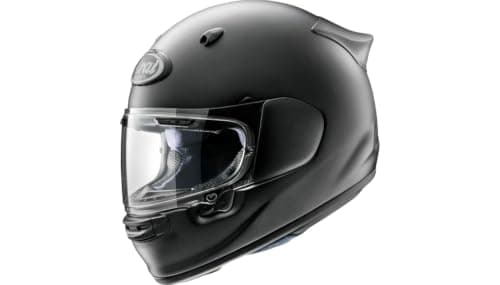
2. Arai Contour-X - DOT plus Snell, and the roundest fit here
If you want an independent body to have re-tested your DOT helmet to a stricter protocol, this is the premium route. The US Contour-X (sold in Europe as the Quantic) is a DOT plus Snell M2025 build in a hand-laid PB e-cLc laminate shell at a published ~1,530 g, built on Arai's smooth continuous-curve philosophy - a shell designed to glance off an obstacle rather than catch on it. Who it is for: a round-oval head doing long all-day miles, who wants Snell on top of DOT and will pay for the shell.
Detail in the Arai Contour-X review, the Snell shelf in best Snell-certified helmets, and the brand question in Shoei vs Arai.
The honest cons. The US build is Snell, not the ECE 22.06 of the European Quantic, so you get an independent standard but not the rotational-impact type approval - a genuine trade, not an upgrade. It is the most expensive helmet on this page by a wide margin, there is no drop-down sun visor, and the round interior that relieves a round-oval head will not suit a long-oval one.
Who should skip it: long-oval heads, and anyone whose priority is the current European approval. Our ECE 22.06 roundup is the page for that.
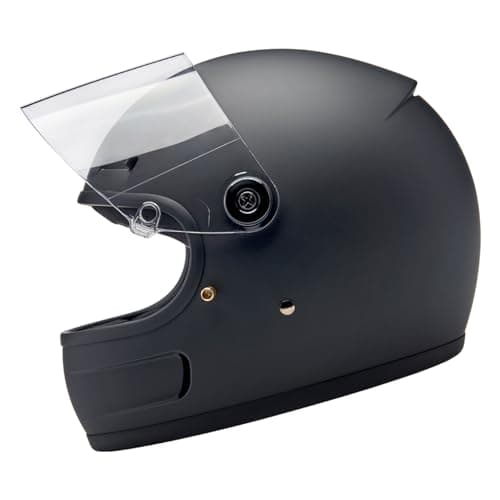
3. Biltwell Gringo SV - DOT and ECE 22.06, without giving up the look
The retro class is where styling most often costs you a certification, and this is the exception. Biltwell states "US DOT FMVSS No. 218 compliant / ECE R22.06 certified" on its own product page, and the US listing carries R22.06 in the title - so this is a genuine current type approval on a classic-looking full-face. Injection-molded ABS shell, published 3.69 lb, and three shell sizes with five EPS options, so the shell scales with your head instead of padding out one size. Who it is for: a rider who wants the classic silhouette and refuses to trade the chin bar or the certification for it.
Detail in the Biltwell Gringo SV review, the certification in its safety rating, and the class in best retro motorcycle helmets.
The honest cons. Never SHARP-tested, so there is no independent star rating. There is no drop-down sun visor and no published Pinlock provision, so you manage sun and fog with the shield you have. It is heavy for a full-face at a published 3.69 lb, and ABS rather than a composite. Ventilation is basic by touring standards.
Who should skip it: long sunny highway days. A drop-down sun visor and a better-sealed touring shell will do more for you than the styling does.
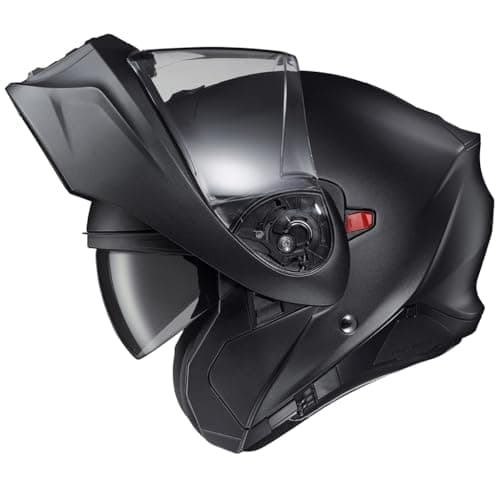
4. Scorpion EXO-GT930 Transformer - DOT and ECE, but read the revision
A genuinely clever helmet, and a useful lesson in reading the label. The EXO-GT930 converts from full-face to open-face, has a drop-down sun visor, and carries DOT plus ECE 22.05 with P/J homologation - so riding it open is approved, which is the claim that matters on a convertible. Polycarbonate shell, published ~1,890 g in XL. Who it is for: a commuter who wants one helmet that is a full-face in February and an open-face in August.
Detail in the Scorpion EXO-GT930 review, and the brand picture in which Scorpion helmet should you buy.
The honest cons. It is ECE 22.05, not 22.06 - the older revision, without the oblique rotational test - and that is exactly why it ranks below the three picks above it. A few marketplace listings claim 22.06 for it; we treat that as unverified. The polycarbonate shell is heavy at ~1,890 g, and it has never been SHARP-tested.
Who should skip it: anyone who wants the current rotational standard. The ECE 22.06 Scorpion EXO-AT960 and the HJC RPHA 91 both have it - see best helmets under $600.
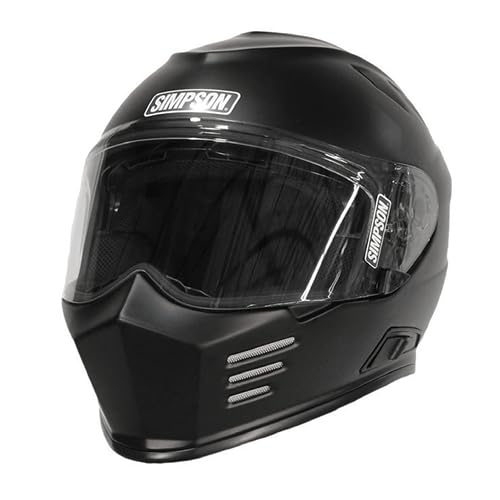
5. Simpson Ghost Bandit - what "DOT/ECE" looks like with no revision printed
We include this one deliberately, because it is the single most common certification situation a buyer runs into and most lists quietly round it up. The Ghost Bandit is a composite-shell touring helmet at a published 3.46 lb with a drop-down internal sun visor, molded speaker and microphone pockets and a famously wide eyeport - and it is sold as "DOT/ECE certified" with no ECE revision named anywhere for the US unit. Who it is for: a rider who wants the Simpson look with touring features and has read the caveat.
The brand picture is in are Simpson helmets good?
The honest cons. Because no 22.05-versus-22.06 code is published for the US helmet, you cannot assume the current rotational standard, and we will not assert it - read the label on the helmet you receive. Owner feedback collected by RevZilla repeatedly flags highway wind noise and inconsistent sizing. SHARP has never tested a Bandit; the two Simpson SHARP results are the European Venom and Darksome 2, different helmets. And sizes and colorways are separate Amazon listings at different prices, so the one we link is not the only one.
Who should skip it: anyone who buys on the certification code first. The AGV K1 S and HJC RPHA 12 both publish genuine ECE 22.06 for less money.
6. Bell Custom 500 - the budget pick, and the clearest trade on the page
This is the budget pick: the cheapest helmet here, sold in the US as a DOT (FMVSS 218) helmet, and the most honest illustration of what a certification can and cannot promise. It is a classic three-quarter lid with five separate shell and EPS sizes - the shell genuinely scales, which is rare at any price - a thin profile that sits low rather than ballooning above the head, and the 5-snap pattern that accepts the whole aftermarket of bubble shields, flat shields and peaks. Who it is for: short urban trips at town speeds, on a rider who has decided the look is worth the coverage.
Detail in the Bell Custom 500 review, and the format comparison in full-face vs open-face helmets.
The honest cons. There is no chin bar, so the most-struck part of a helmet is simply not covered - no open-face can fix that, and no DOT label changes it. Retail listings disagree about its ECE status (some say 22.05, some 22.06) and Bell does not publish a revision for the US unit, so we do not assert ECE. No open-face carries Snell and SHARP does not test the class, so there is no independent data at all. It is widely reported to run small, and there is no shield, seal or sun visor in the box.
Who should skip it: anyone riding highway miles. The Biltwell Gringo SV above keeps the classic look, keeps the chin bar and adds ECE 22.06.
So is "DOT approved" good enough?
It is good enough to be legal, and it is not nothing - FMVSS 218 is a real test with real anvils. But it is the floor, and the honest summary of this page is that the DOT label tells you a helmet is street legal and almost nothing about how good it is. The useful question is what else is printed next to it.
Three practical rules come out of ranking these six. First, a named ECE revision beats an unnamed one: "ECE 22.06" is a verifiable type approval, "DOT/ECE" with no number is a marketing phrase. Second, an independent star rating is worth more than an extra sticker, which is why the cheapest certified helmet on this page wins it. Third, none of it survives a bad fit - every standard is tested on a correctly fitted helmet, so start with how to measure your helmet size before you start comparing labels.
The verdict
Buy the Bell MX-9 Adventure MIPS. DOT, ECE 22.06, MIPS and an independent SHARP 4 out of 5 is the most verified evidence on this page, and it is also one of the two cheapest full-coverage picks on it.
Buy the Arai Contour-X if you want Snell on top of DOT and a round-oval fit. Buy the Biltwell Gringo SV for a retro full-face with genuine ECE 22.06. Buy the Scorpion EXO-GT930 if a convertible is the point and you accept 22.05. Buy the Simpson Ghost Bandit for the look and the touring features, knowing the ECE revision is unpublished. And buy the Bell Custom 500 only if you have genuinely decided that an open-face is the trade you want to make.