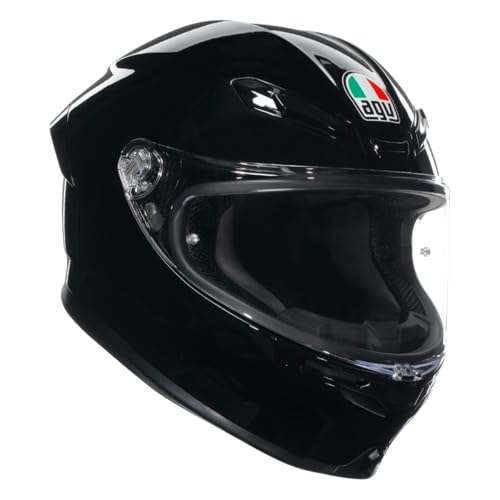
The best all-round alternative to Arai is the AGV K6 S: a carbon-aramid shell at a published ~1,255 g holding DOT and genuine ECE 22.06, with the only SHARP 5-out-of-5 score in our entire catalog - roughly 275 g lighter than the Arai Contour-X, and independently crash-rated, which no US Arai we rate is. Who this page is for: a rider who shortlisted an Arai, then stalled on the price, on the missing sun visor, or on discovering that the US build is a Snell helmet rather than the ECE 22.06 one they read about abroad.
Arai has a deserved reputation, so this page starts by saying what the brand is genuinely best at. Only then does it name the helmets that match it, because an alternatives page that opens by running down the original is not giving you a decision - it is giving you a sales pitch.
First: what Arai is genuinely best at
- Shell shape as a safety strategy. Arai builds a smooth, continuous curve with as few protrusions as possible, on the principle that a shell should glance off an obstacle rather than catch on it. Vents and fittings are designed to shear away. It is a design philosophy rather than a certification, and no rival we rate pursues it as single-mindedly.
- Hand-laid composite construction. The Contour-X uses a PB e-cLc laminate at a published ~1,530 g and the XD-5 a super-fiber composite at ~1,683 g. These are laminated shells, not injection-molded ones, and the finish shows it.
- Snell on the US builds. Both Arai helmets we rate are DOT plus Snell - M2025 on the Contour-X, M2025D on the XD-5. Snell is an independent foundation testing to its own stricter protocol, so that is a real third-party check on top of the self-certified DOT label, and most rivals in this price class do not carry it. See best Snell-certified helmets.
- The roundest interior we rate.Arai's shape is a genuine relief for round-oval heads that most sport helmets pinch, and it is the single most common reason riders stay with the brand once they have found it. Our head shapes explainer covers why that matters more than any spec.
- A peak that behaves. On the XD-5 the peak is engineered to shed wind rather than lift your head at highway speed, which is not true of every adventure helmet with a peak bolted to it.
Now the honest counterweight, which is why this page exists. The two Arai helmets we rate are among the most expensive helmets in our catalog, neither has a drop-down sun visor, and neither US build carries ECE 22.06. The European Quantic and Tour-X5 - the same helmets under different names - are ECE 22.06 and scored 4 out of 5 with SHARP, but that is not the helmet on the US shelf, and we do not transfer a certification or a star rating across differently homologated builds. There is also no Arai flip-front in our catalog at all, so if what you wanted was a lifting chin bar, Arai was never going to be the answer.
How to read the prices here. We do not print dollar figures in prose - the buy module on each pick carries the live price pulled from the Amazon product API, stamped with the date it was checked, and that card is the authoritative figure. We have not worn or crash-tested any of these helmets; we read what each maker publishes and check whether anybody independent has tested it.
How we matched the six alternatives
Each pick answers a specific reason for walking away from an Arai, in this order of how often the reason comes up:
- You wanted the premium road helmet but want ECE 22.06 and independent data. That is pick 1, and it is also lighter.
- You wanted Arai's racing pedigree and could not justify the price. Pick 2 carries a racing homologation no Arai we rate holds.
- You were buying the XD-5 for long adventure-touring days. Pick 3 is the closest direct cross-shop, with the same Snell-on-DOT certification pattern.
- The missing sun visor was the dealbreaker. Pick 4 exists for exactly that.
- You actually needed a flip-front. Pick 5 is the lightest certified one we rate.
- You want the certification and not the price. Pick 6 is the budget pick.
1. AGV K6 S - lighter, ECE 22.06, and the only SHARP 5/5 we rate
If you were buying an Arai as your premium road helmet, this is the helmet that answers it on evidence. The K6 S is a carbon-aramid shell at a published ~1,255 g - roughly 275 g lighter than the Contour-X, which is a genuinely different helmet to wear for six hours - holding genuine US DOT plus ECE 22.06 and an independent SHARP score of 5 out of 5, the only perfect score in our catalog. The field of view is derived from AGV's racing helmets and is wider than most road lids give you. Who it is for: a rider who wants the current European approval and third-party test data, not a shell philosophy.
Detail in the AGV K6 S review, the certification in its safety rating, and the direct comparison in AGV K6 S vs Arai Contour-X.
The honest cons. There is no internal sun visor, so it does not fix that complaint. The sport-oriented fit is snug and runs intermediate-oval, which means it is the wrong answer for the rider whose reason for buying Arai was the round shape - that rider should read pick 3 or stay with Arai. And it is not cheap: it is a premium helmet priced like one.
Who should skip it: round-oval heads, and anyone who tours long days wanting a sun visor and maximum quiet.
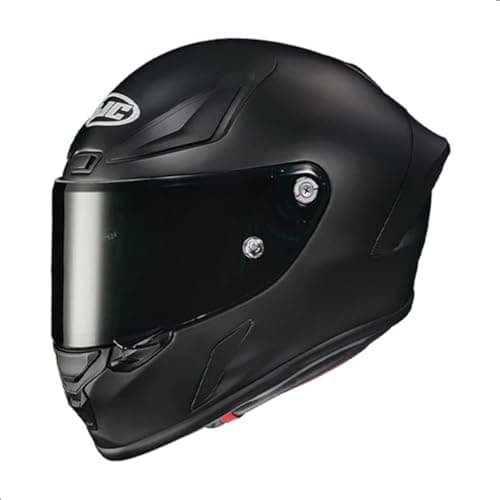
2. HJC RPHA 1N - the racing homologation Arai does not show us
If what drew you to Arai was the racing heritage, this is the cheaper route to the paperwork that heritage is supposed to represent. The RPHA 1N is HJC's MotoGP-derived flagship: a PIM+ carbon shell at a published ~1,510 g carrying DOT, ECE 22.06 and FIM racing homologation - and FIM is the approval required to race internationally, a separately tested standard rather than a sticker. Neither Arai we rate holds FIM. Its ACS ventilation runs five intakes and four exhausts. Who it is for: a sport rider or track-day regular who wants race-legal documentation without race-flagship money.
Detail in the HJC RPHA 1N review, the certification in its safety rating, and the premium cross-shop in RPHA 1N vs Shoei RF-1400.
The honest cons. It has never been SHARP-tested, so it has approvals but no independent star rating. It is a hard, track-focused shell and fit - noticeably less plush than an Arai interior, which is a real downgrade if comfort was part of why you were looking at one. The ventilation that works at 100 mph is loud at 40. And there is no sun visor.
Who should skip it: commuters and tourers. This is a race-derived lid; a sport-touring helmet suits daily riding better.
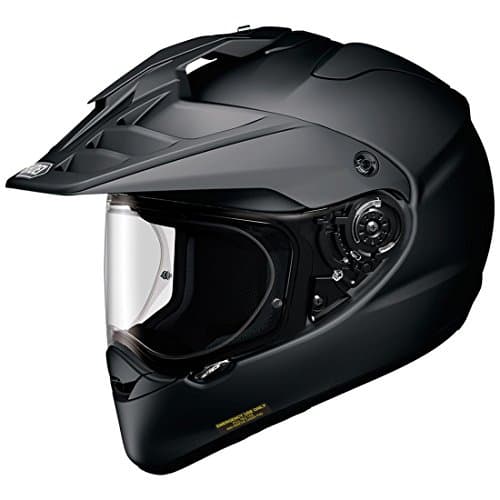
3. Shoei Hornet X2 - the closest cross-shop for an XD-5
The adventure half of the Arai question has one obvious answer. The Hornet X2 (sold as the Hornet ADV) is a road-biased adventure helmet in an AIM+ composite shell at a published ~1,778 g, and critically it follows the same certification pattern as the Arai: DOT plus Snellon the US build. It is one of the quieter peaked adventure helmets on sealed roads, with Shoei's shield seal and finish. Who it is for: an adventure-tourer doing mostly pavement who wanted the XD-5 and wants the Snell-on-DOT certification without the Arai premium.
Detail in the Shoei Hornet X2 review, the direct comparison in Arai XD-5 vs Shoei Hornet X2, and the shelf in best adventure touring helmets.
The honest cons. It is heavier than the XD-5 by roughly 95 g, and the peak generates more lift off-roadthan the newer Arai's. Like the Arai, the US build has no ECE 22.06, so this swap does not solve that complaint - it solves the price one. It has never been SHARP-tested, and Shoei's intermediate-oval interior will not give a round-oval head the relief Arai does.
Who should skip it: riders doing genuinely 50/50 or more off-road. A lighter, more dirt-focused lid serves you better - see best dual-sport helmets.
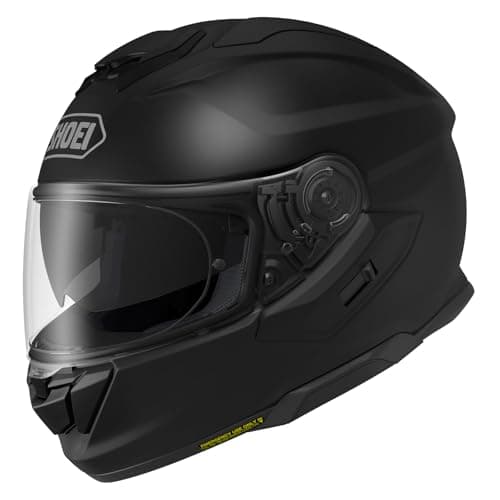
4. Shoei GT-Air 3 - the sun visor Arai will not fit
This is the pick for the single most common Arai complaint. Neither Arai we rate has a drop-down internal sun visor, and the GT-Air 3 is built around one: an excellent drop-down sun visor, an AIM composite shell at a published ~1,774 g, a purpose-built channel for Shoei's SRL comms so there is no external bolt-on, and the quiet, refined manners of a dedicated touring helmet. Who it is for: a daily tourer or commuter who rides into low sun and does not want to swap shields or carry sunglasses.
Detail in the Shoei GT-Air 3 review, the head-to-head in GT-Air 3 vs Arai Contour-X, and the format roundup in best helmets with a sun visor.
The honest cons. The US version is DOT only - no ECE 22.06 and no Snell, so on certification it is a step down from the Arai you were considering, and that is the trade you are making for the sun visor. The European GT-Air 3 is ECE 22.06 with a 5/5 SHARP score, but that is not this helmet. It is also heavier than a sport full-face and the most expensive pick on this page.
Who should skip it: anyone whose reason for shopping Arai was the certification. Picks 1, 2 and 5 all publish ECE 22.06.
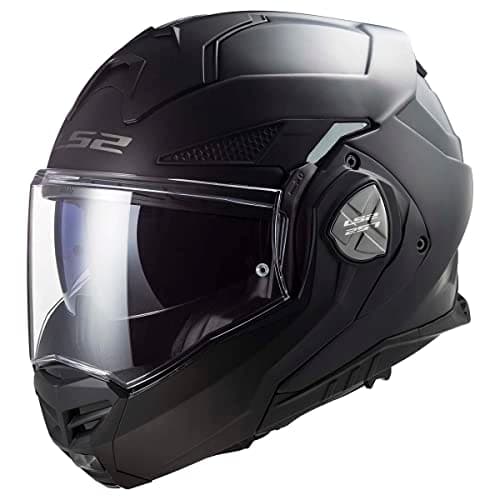
5. LS2 Advant X - the flip-front Arai does not make
If you wanted a lifting chin bar, no Arai in our catalog was ever going to answer, and this is the certified featherweight that does. The Advant X is a forged carbon modular at a published ~1,550 g - lighter than either Arai here - carrying DOT plus ECE 22.06 with P/J dual homologation, which is the claim that matters on a flip-front because it means the helmet is tested and approved both closed and open. It also has a drop-down sun visor and a channel for LS2's Cardo-based comms. Who it is for: a tourer or commuter who wants the chin bar to lift, the sun visor fitted, and the current European approval on the box.
Detail in the LS2 Advant X review, and the shelf in best modular helmets under $500.
The honest cons. The 180-degree flip mechanism and modular seams make it louder at highway speed than a one-piece carbon full-face, and a sealed premium modular is quieter still. It uses a micrometric ratchet strap rather than a Double-D ring, and only two shell sizescover the whole range - a real step back from Arai's shell-per-size approach. It has never been SHARP-tested, and LS2 does not have the dealer and parts record of Arai or Shoei, which matters more on a helmet with a mechanism.
Who should skip it: riders whose first priority is outright touring silence.
6. AGV K1 S - the budget pick, with the certification intact
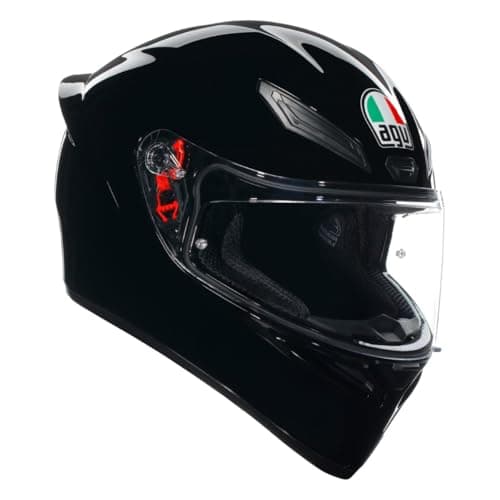
This is the budget pick, and it exists to make a point: the current European approval is not a premium feature. The K1 S carries genuine DOT plus ECE 22.06in AGV's high-resistance thermoplastic shell at a published ~1,600 g, with a wide field of view and aero shell derived from the brand's racing helmets, for a small fraction of an Arai. Who it is for: a rider who wanted an Arai, cannot spend that, and would rather have a verifiable certification than a nameplate.
Detail in the AGV K1 S review, the certification in its safety rating, and the value context in best helmets under $300.
The honest cons. The thermoplastic shell is heavier and less premium than a laminated composite, and at ~1,600 g it is heavier than the Contour-X despite costing a fraction as much - this is the clearest illustration on the page that price buys material and weight, not approvals. It has never been SHARP-tested, there is no sun visor, and the sporty fit runs snug for round heads.
Who should skip it: round-oval heads and riders who want a plush interior. Those are the two things Arai genuinely sells that this helmet does not.
So should you buy an Arai anyway?
Sometimes, yes - and it is worth being specific about when. Buy the Arai if your head is round-oval and the brand is the only one that stops pinching you, because no certification on this page compensates for a helmet that hurts at hour three. Buy it if you want Snell plus a hand-laid shell and a glancing-off profile, and you have priced that honestly.
Look elsewhere if your reason was the certification, because the US Arai builds are Snell helmets and not ECE 22.06, and four of the six picks above publish 22.06 for less money. Look elsewhere if you need a sun visor or a lifting chin bar, because neither exists in the Arai range we carry. And if the price was the only obstacle, note that the cheapest pick on this page holds an independently type-approved standard that neither Arai here does.
If you are cross-shopping the premium Japanese brands against each other rather than leaving them, Shoei vs Arai is the page for that, and alternatives to Shoei runs the same exercise for the other one.
The verdict
Buy the AGV K6 S. It is roughly 275 g lighter than the Contour-X, it holds genuine ECE 22.06 rather than a US Snell build, and it is the only helmet we rate with a perfect independent SHARP score.
Buy the HJC RPHA 1N for FIM racing homologation at a fraction of the price. Buy the Shoei Hornet X2 if you were buying an XD-5 for pavement miles. Buy the Shoei GT-Air 3 if the missing sun visor was the dealbreaker, knowing the US build is DOT only. Buy the LS2 Advant X if you need the chin bar to lift, and the AGV K1 S if you want the current European standard for the least money on this page.